


I haven’t read John Steinbeck’s East of Eden from 1952, nor have I watched the previous on‑screen adaptation. But I have seen the discourse around what people have historically perceived the story and its themes to be, and how this new Netflix take does something different, exploring a fresh perspective that most are thrilled by.
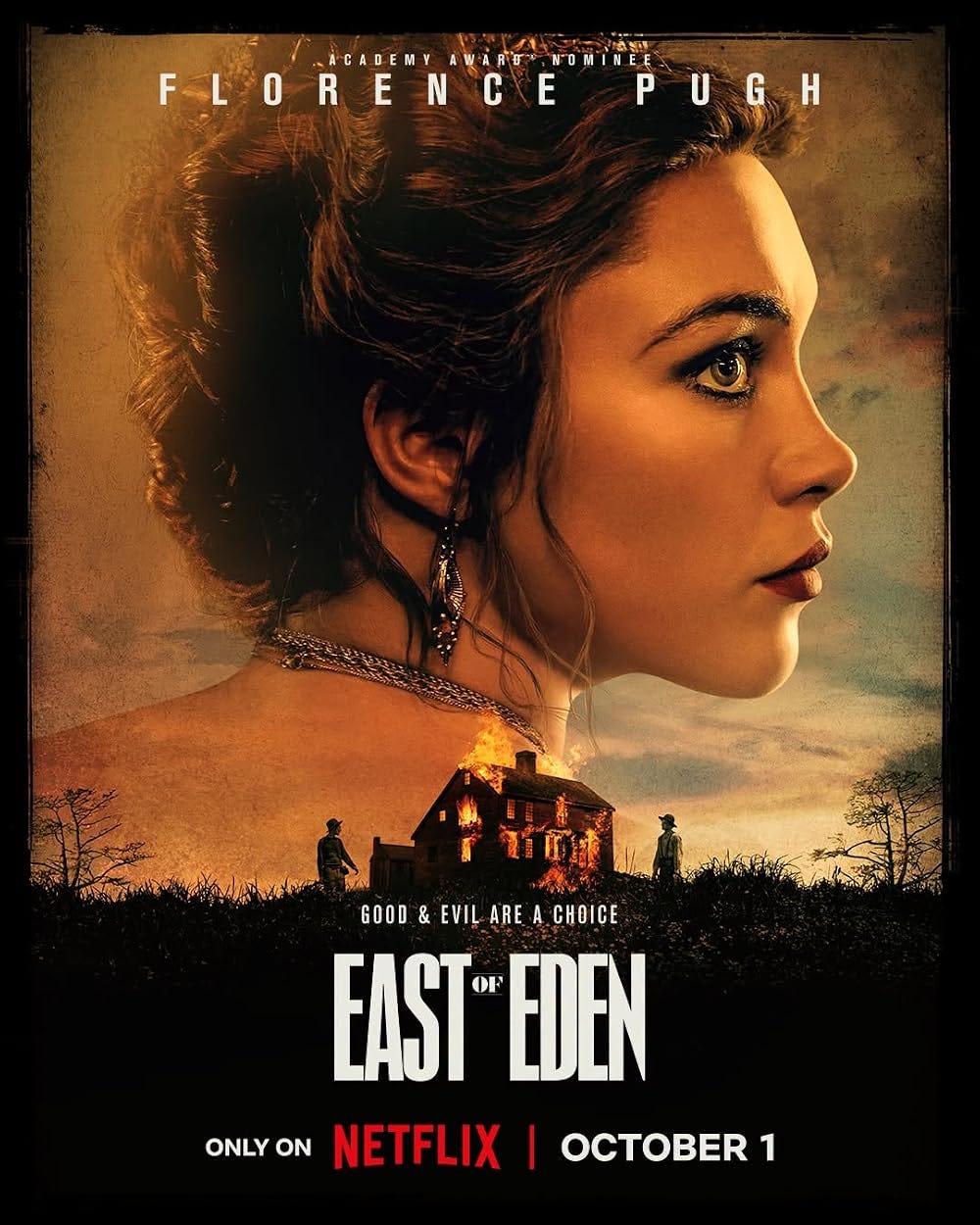
Starting with the series as a standalone: it was brilliant. With powerhouses like Florence Pugh, Mike Faist, Christopher Abbott and Hoon Lee at the helm, you are never not fully immersed in the characters’ actions, inactions, emotions and decisions. The pacing and structure complement the phenomenal cast, script and cinematography in a way that makes seven episodes feel both epic and intimate; big enough to feel like a saga, small enough that you never lose the pulse of a single scene.
But what really pulled me in were the overarching themes of good vs evil, and this time, you are actually rooting for evil.
Monster, Woman, or Both?
Some argue that Cathy Ames is inherently evil, that some people are just born that way. Others say Steinbeck in the ’50s was inherently misogynistic for asserting Cathy as evil with no remorse, simply because she doesn’t fit the archetype of what a woman “should” be: wife, mother, obedient and serving.
In the original novel, Cathy is described almost as a monster from birth, a personification of evil that feels almost mythic in its certainty. But in modern times, this adaptation shines a brighter light on Cathy, giving some meaning to her actions as consequences of things she goes through and suffers from. There is still an innate evilness in the extremes she goes to, but it reframes it as a woman taking back power in a world that has consistently tried to take it from her.
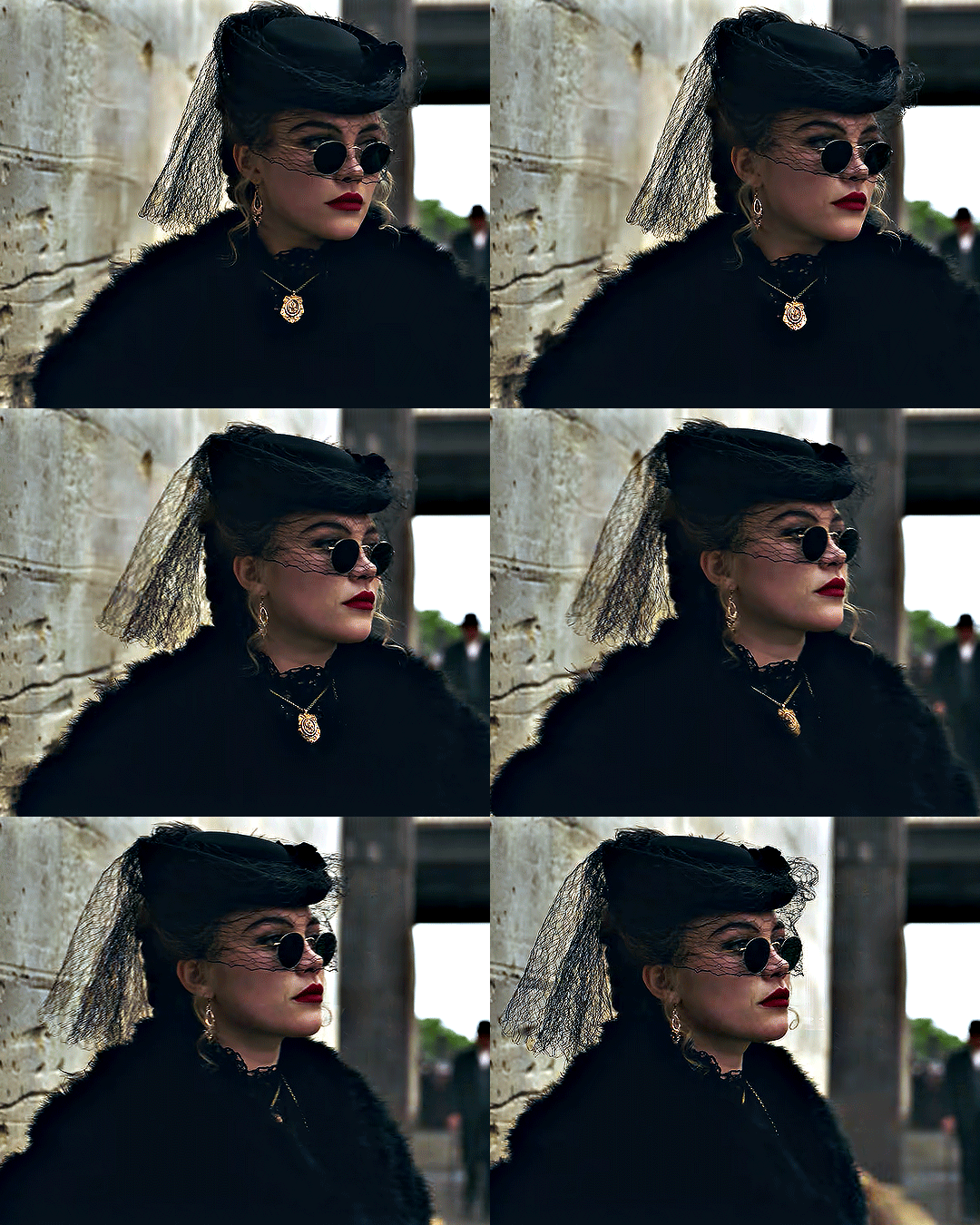
In our current climate, seeing an evil female protagonist is freeing, questionable at times, but freeing. We’re so used to women on screen being either saintly, suffering, or “complicated but ultimately good” that a woman who is genuinely, unapologetically awful feels almost radical. It’s not that we’re celebrating cruelty; it’s that we’re finally allowed to witness the discomfort of a woman who refuses to be likeable.
Love as a Cage
Spoiler alert (is it still valid for a novel that’s been in rotation for 70 years?), but Adam Trask finds Cathy inches from death, falls in one‑sided love with her as she recovers, marries her, and takes her miles away to start a new life; despite her repeatedly saying it’s not what she wants. Alas, she’s at his mercy. He keeps telling her she’ll “learn” to love it. It’s infuriating.
Having spent time with this character, we already know he has a white‑knight complex and well‑meaning intentions, grappling with his own insecurities. He’s not a villain in the traditional sense; he’s kind, earnest, even noble in his own mind. And yet, when Cathy, who we’ve also come to know as a manipulator and schemer, packs her bags and shoots at him, I was rooting for her, hard.
This is why adaptations matter, I guess: recontextualising a story in the 21st century lets us see the power dynamics differently and ask who we’re actually meant to sympathise with. Adam isn’t evil, but he’s controlling in the name of love, and Cathy’s violence, however extreme, becomes a response to being trapped rather than pure malice. The show doesn’t excuse her, but it does make you understand her a little.
Thou Mayest
The other emotional core of the show is Lee, played with such nuance by Hoon Lee. He introduces the idea of “timshel”, Hebrew for “thou mayest”, the idea that we as humans have a choice, that we aren’t inherently anything if we choose not to be it.
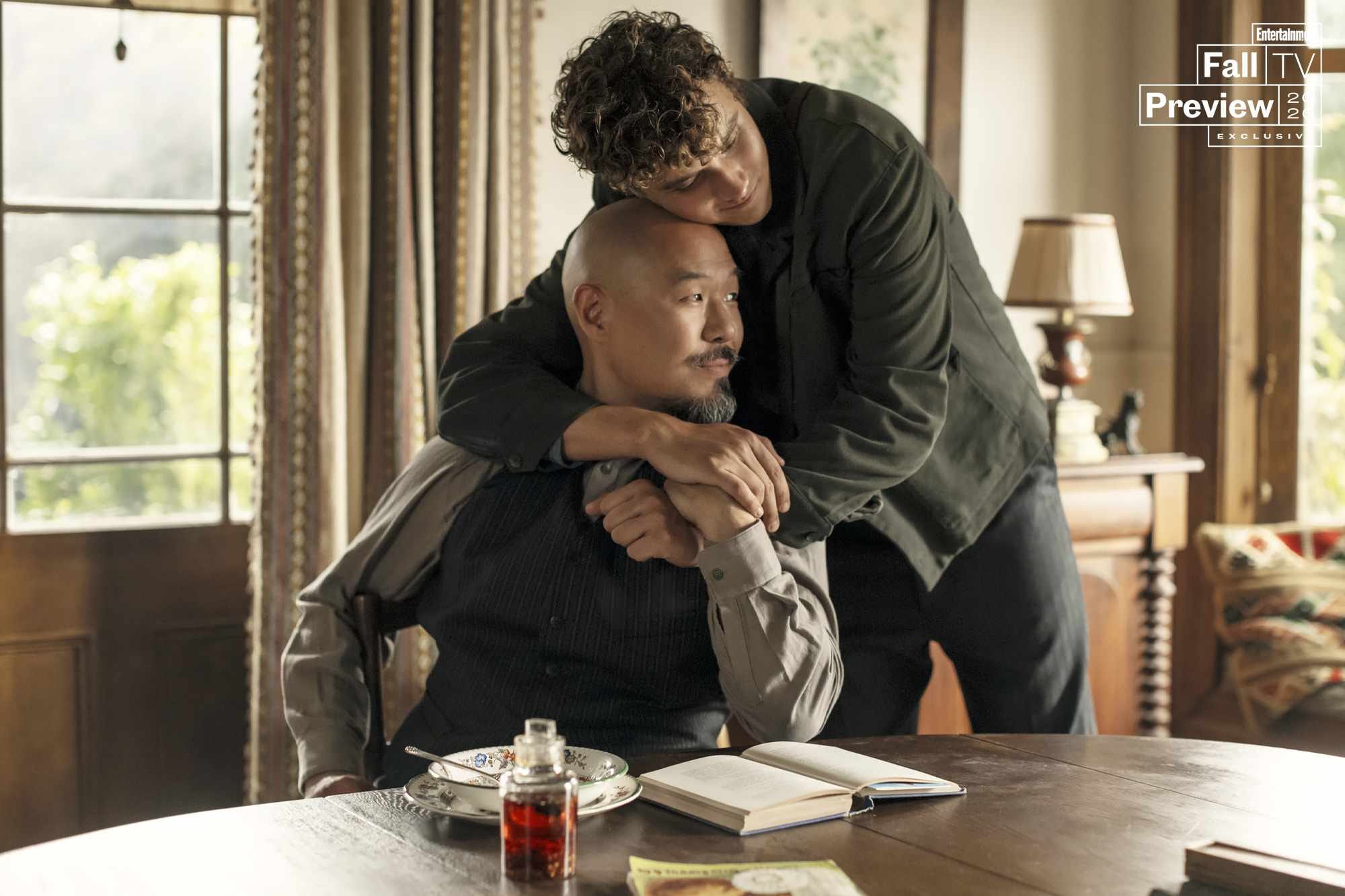
It’s especially poignant towards the end, when Lee gets Adam, now himself inches from death, to forgive his son and not carry the generational trauma he clearly inherited from his own father. In a story obsessed with whether evil is inherited or chosen, Lee is the quiet moral centre, reminding everyone that choice is still on the table.
What makes Lee so effective is that he’s not self-righteous about it. He doesn’t lecture; he lives the philosophy. His own life is proof that circumstance doesn’t have to be destiny, and that makes his quiet insistence on “thou mayest” feel earned rather than imposed.
The Cost of Being Unlikeable
Cathy’s fate is obviously not met with the same compassion. She dies a manic death, alone, no longer as beautiful as she used to be (kudos to the makeup team for ageing Pugh the way they did), her reputation preceding her. Because naturally, for a woman, a life of sin begets a hellish end. Obviously, it can be argued that Cathy had it coming for her. While she dealt with the men in her life with vengeance for the injustices they represented, she was also rather unkind and Machiavellian to the woman who saw her as a daughter and made her the beneficiary of all her fortunes. A means to an end for Cathy. Well, nobody claimed she wasn’t a complex character.
However, there’s a deeper gender‑studies‑esque commentary buried here in the original plot: the men are victims of their circumstances and still get to make “better” choices, while the women get neither the sympathy nor the redemption arc. They get isolation and decay and betrayal. But for a moment, as Cathy breathes her last, we see a glimpse into her mentation and logic.
For this, I’m thankful to Zoe Kazan, creator and showrunner, for injecting some empathy towards Cathy. She doesn’t rewrite Cathy into a saint, she just refuses to let her be a caricature. And in doing so, she exposes how much of the original story’s moral framework depends on Cathy being irredeemable.
Fun fact: Zoe is the granddaughter of Elia Kazan, director of the 1955 East of Eden film starring James Dean. She has clearly given the story, and her filial legacy, some thought.
Small Roles, Big Weight
Back to the Netflix series itself: it is very well made, with a special shout‑out also to Mike Faist as Charles Trask, a smaller role that carries its weight in every scene he’s in. The chemistry and tension between the Trask brothers, and the way Faist plays Charles’s volatility, add a whole other layer to the family drama that makes the larger themes land harder. Cal Trask, son of Adam, played by Joseph Zada, too holds his own in the latter episodes.

Christopher Abbott’s Adam is quietly devastating in his own right, the kind of performance where the tragedy is in what he doesn’t say, what he keeps choosing despite every sign that he shouldn’t. And Florence Pugh as Cathy is magnetic in a way that makes you understand why everyone around her keeps making terrible decisions in her orbit.
The Takeaway
What East of Eden does so well is refuse to let you have an easy moral position. You can’t simply condemn Cathy without confronting the systems that shaped her, and you can’t fully excuse Adam without acknowledging the ways his “love” becomes control.
This adaptation feels timely without being preachy. It doesn’t tell you what to think about Cathy; it just gives you enough to sit with the question.
Maybe the point was never whether Cathy was good or evil. Maybe the point is that we’re still so uncomfortable with a woman who refuses to be either.
What did you make of this adaptation, did you root for Cathy too, or do you think the show went too far in humanising her? Let me know in the comments! And hit like & subscribe if you haven’t already!