


On December 5th, Netflix announced its $82.7 billion acquisition of Warner Bros., including its film and television studios, HBO Max, and HBO. The announcement itself was already a gut punch, a streaming service built on quantity over quality, notorious for removing content from its library arbitrarily and without ceremony, is now absorbing one of the most storied media conglomerates in history. A century of filmmaking legacy, irreplaceable IP, and unparalleled archives are now in the hands of an algorithm designed to optimise for convenience.
But then Ted Sarandos spoke.
The Netflix co-CEO, said something that crystallised everything wrong with this moment. When discussing theatrical windows, he stated that Netflix would work to make them “more consumer-friendly,” ergo, short theatrical runs, allowing audiences to access content faster… on Netflix. He then dropped the bomb: regarding Barbie and Oppenheimer, he said they “definitely would have enjoyed just as big an audience on Netflix. And so I don’t think there’s any reason to believe that the movie itself is better in any size of screen.”
That sentence should haunt every person who believes in cinema.
The Hypocrisy I Had to Confront
I was angry when I read that. Furious, actually. As a cinephile, as someone who has written extensively about theatrical experiences and their importance to pop culture, I felt that rage that all film lovers are feeling right now, the collective understanding that something sacred is being sacrificed on the altar of profit margins and shareholder returns.
Theatres, the theatrical experience, and third spaces matter. I’ve always had a soft spot for movies for no apparent reason. Maybe it’s the romantic escapist in me, maybe it’s the lover of arts, maybe it’s finding community online when I was given free rein over the internet from a young age, maybe it’s the lover of stories in me. I don’t know exactly. But I do know that in another life, I could have totally gone to school for editing, screenwriting, or even filmmaking. In another century, I absolutely would have been a patron of the arts.
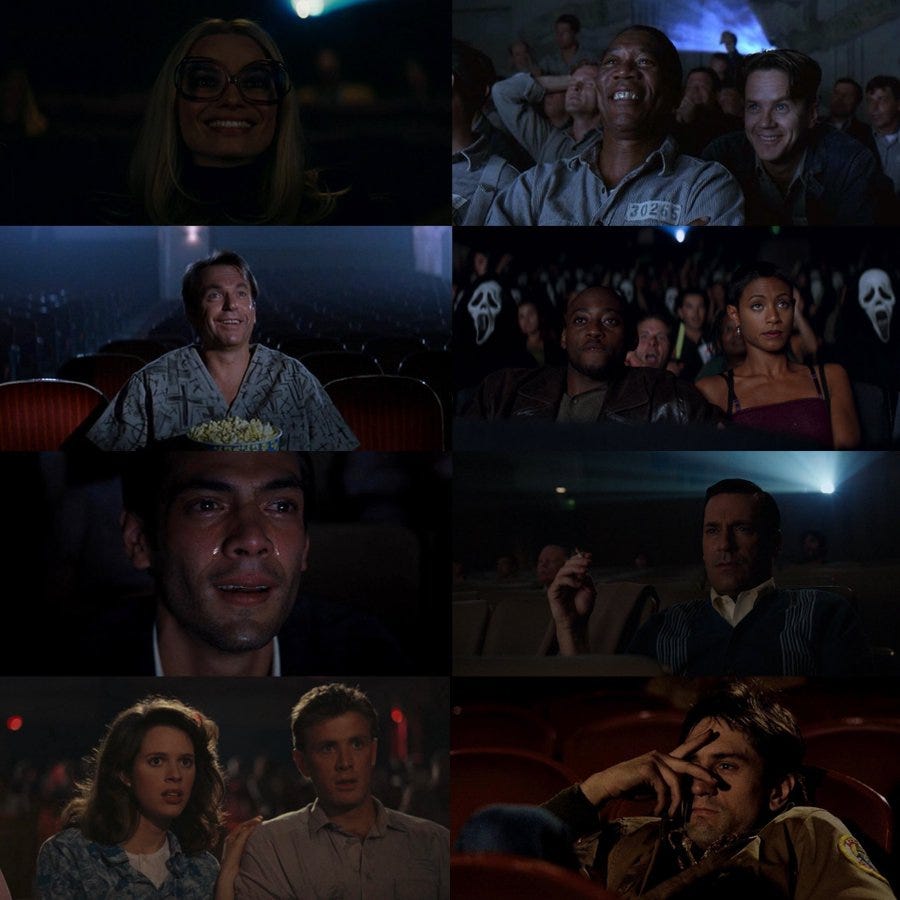
But then I paused. And I realised something deeply uncomfortable: I am a hypocrite. A complete and utter hypocrite.
I am someone who went to see Fantastic Four and Superman on consecutive days last summer, someone who understands the power of the theatrical experience in my bones. And yet, I still haven’t watched Wicked: For Good, despite endlessly consuming Michelle Yeoh’s “Madame Morrible MM flip it around, Wicked Witch” memes. I haven’t watched Now You See Me 3, despite reporting on it extensively, sometimes even when it wasn’t necessary. I haven’t watched Zootopia 2, despite loving the franchise with the kind of fervour that puts Nick the Fox at number one on my “hear me out” list. And when I learned that Wake Up Dead Man: A Knives Out Mystery would be in theatres a week before Netflix, my immediate thought was: “Nah, I’ll wait.”
That’s when it hit me: the grain of truth theory I studied in a high school psychology class, suddenly made visceral. What Ted Sarandos is saying, what I ideologically reject, is something I am empirically proving true through my own behaviour. I have become a statistic in his argument. I am the evidence he needs.
And in providing that evidence, I, and millions like me, have inadvertently given the industry permission to believe that the theatrical experience doesn’t matter.
The Root Cause: Convenience
A few weeks ago, I was talking to a friend who ribbed me about how I could watch any film in any quality on shady third-party sites. I had watched a low-angle, phone-recorded, terrible-sound-quality bootleg of The Materialists, a film she loved, and I…didn’t care about. When she called me out on the absurdity—why would I subject myself to that?—I had an answer ready: “I’d rather stay in the loop, be the first to know, and avoid spoilers than wait to watch something in theatres.”
She pushed back with a simple question that made me pause: “What’s to say The Materialists, or any other film not made for IMAX, isn’t a spectacle too? Wouldn’t those directors also want their work to be seen on the big screen?”
I was speechless because, in my heart, I do believe that. Every filmmaker deserves the respect of their vision being seen the way they intended it. I know someone who watched Dune for the first time on a flight. I find that genuinely blasphemous. And yet, here I am, choosing convenience over cinema.
She eventually let it go, saying, “I know you appreciate art like that. You’d just rather not wait and be the first to know something so you can tell your friends about it.”
She was right. And that’s the root cause of everything falling apart: convenience. It’s the ease of access, the removal of friction, the ability to have what you want, when you want it, with minimal effort. That’s what’s driving these industry deals. That’s what’s empowering Netflix to absorb Warner Bros. That’s what’s making Ted Sarandos believe he’s right.
What Could Have Been: HBO’s Model
Here’s the thing that makes this acquisition even more infuriating: Warner Bros. had an excellent year, arguably one of the best years in recent television and film. Sinners, Weapons, Superman, F1, One Battle After Another. HBO released The White Lotus, The Gilded Age, and The Pitt. Succession defined an era. These weren’t shows that thrived under the Netflix model of “drop everything at once so people can binge while doing laundry.” These were shows that forced audiences to wait.
Week after week, HBO made people stay with their stories. They created genuine cultural moments. They brought people together in real time, not algorithmically sorted into isolated viewing experiences, but united in genuine discourse. Succession wasn’t just a TV show; it was a weekly event. The kind of thing that generates think pieces and water-cooler conversations and fan theories that span the entire week between episodes.
Netflix’s philosophy is the opposite: create content optimised for passive consumption, with simplified plots designed for distracted viewing, released all at once so you can watch whenever your schedule allows. It’s content designed to exist alongside your life, not to demand your attention.
But art, real art, should demand attention. It should require presence. It should inconvenience you just enough to make you feel like you’re part of something.
What’s terrifying is that Netflix is now going to inherit HBO’s library, its infrastructure, and its legacy, and almost certainly erode it from the inside, gradually shifting toward that model of convenience and quantity. The deal still needs regulatory approval through 2026-2027, but the preemptive messaging from Netflix is already ominous. They’re already walking back promises about theatrical windows. They’re already talking about how they’ll “evolve” releases to be “more consumer-friendly”, which is corporate speak for “available on Netflix sooner.”
The Broader Cultural Death
People online have joked that this is starting to feel like an episode of Succession or The Studio, but the dark reality is that it will very soon become our actual reality. A monopoly is forming, and nobody’s stopping it.
What’s to be done? If this were a manifesto, I would pledge to watch every film in theatres, to boycott Netflix, to resist the siren song of convenience. But I can’t make that pledge in good faith, because I’m not confident I, or anyone in my generation, will actually follow through. We’ve been conditioned by convenience. The friction is too removed. The habit is too ingrained.
But I can hope that Christopher Nolan (the newly appointed president of the Directors Guild of America), Tom Cruise (wherever he hibernates), the Academy, SAG-AFTRA, the Writers Guild, and everyone who still believes in cinema as an art form will treat this acquisition as a bat signal. A call to arms. A moment to take a stand against the gradual erosion of theatrical culture.
Because if we don’t, we’ll wake up one day and realise that going to see a film in a theatre felt like a quaint, antiquated ritual. Like something our grandparents did.
It’s Not Just Movies
And if culture dying in cinema wasn’t enough, consider this: Pantone just declared WHITE, specifically “Cloud Dancer”, as the colour of 2026. Their reasoning? The world is supposedly “craving respite, less noise, less fun, more simplicity.”
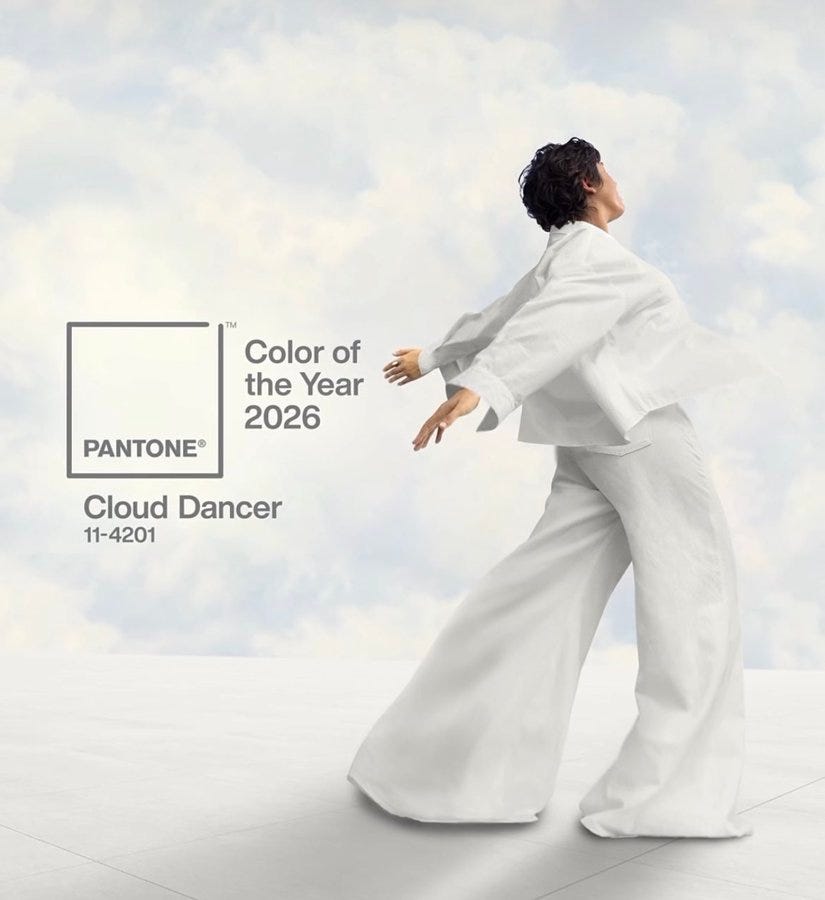
This is dystopian. We live in a world that is divisive, chaotic, and messy. We live in an era where everyone has opinions about everything, where discourse is loud and constant. And Pantone’s response is to predict and, in some ways, demand that we collectively embrace... nothing. Blankness. A colour that represents the absence of personality.
It feels like we’re being subtly coerced into subconscious neutrality, if we’re all wearing white and embracing “simplicity,” how can we take sides on anything? How can we have strong opinions? How can culture exist if there’s nothing to push against?
Then there’s AI, that entire Pandora’s box of sucking the life out of life and inserting the ‘cult’ in culture, leaving behind only its hollow shell. Artists displaced, creativity commodified, authenticity replaced with statistical probability.
The Takeaway
Culture is dying because we, the consumers, the audience, the supposed arbiters of taste, have chosen convenience over art. We’ve optimised ourselves into a corner where every experience is frictionless, every desire immediately gratified, every moment commodified for algorithms and data points.
Ted Sarandos isn’t wrong about what consumers want. He’s disturbingly right. We’ve already chosen. By waiting instead of going to theatres, by accepting blankness instead of demanding colour, by embracing AI-generated convenience instead of insisting on human creativity, we’ve cast our votes.
The question isn’t whether culture is dying. It clearly is. The question is whether we want to save it.
And honestly? I don’t know if we do.
Waiting for the next episode of The Studio to see what happens in 2026