


Thank God I got to see Artificial at the BFI London Film Festival, because who knows when, where, or even if the rest of us will get to see it. For a film whose release seemed increasingly unlikely by the day, its existence on a cinema screen already feels like a minor miracle.
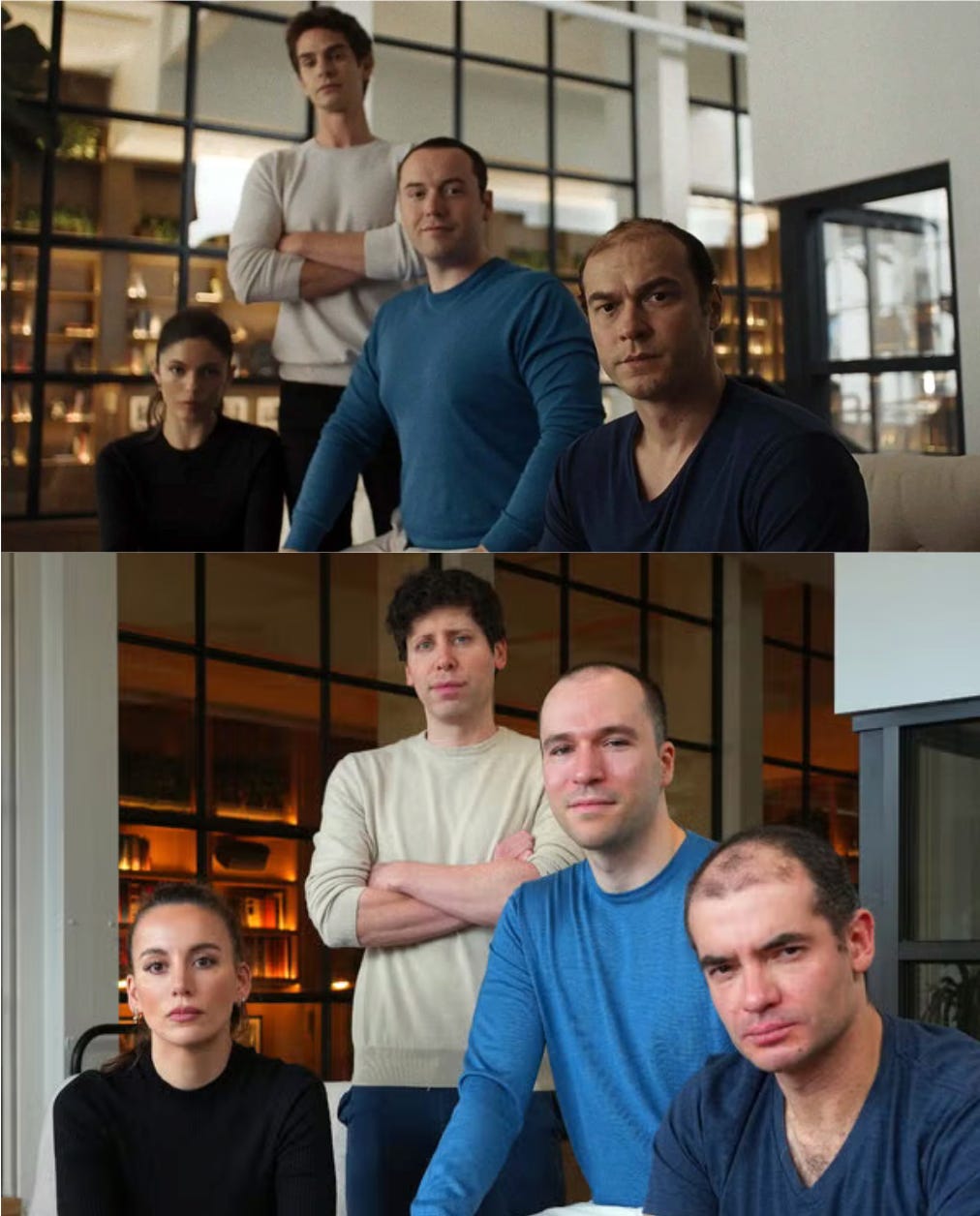
Originally developed with Amazon MGM attached as distributor, the Luca Guadagnino-directed film was suddenly dropped by Amazon, coincidentally just days after the company signed a $50 billion deal with OpenAI. Rumours suggested that Amazon believed the film would be better served by another studio, or that the film was, quite simply, bad. But I think we’re all a little smarter than that. The film was subsequently shopped around and screened for A24, Focus Features, Netflix and Warner Bros. No bidding war, no dramatic studio showdown. They all passed. All except for Neon.
And while Neon has certainly earned its stripes as an indie distributor, it doesn’t quite have the reach or muscle of the studios that turned the film down. Which means its already uncertain theatrical release, currently slated for January 2027, could be geographically limited, with no guarantees about when or where it might eventually land digitally. Given the film’s subject matter, the irony is almost too on the nose. It genuinely wouldn’t surprise me if Artificial became lost media. And I’m not even being hyperbolic.
It’s hardly shocking. AI, and the likes of OpenAI and Sam Altman, are no longer confined to their own little corner of Silicon Valley. They’re increasingly dictating the terms on which entire industries, businesses and institutions operate. AI isn’t a bubble within the internet; it’s becoming the connective tissue between every bubble. Nobody wants to find themselves on the wrong side of the people building it.
Which makes Artificial’s journey to the screen almost as interesting as the story it tells.
The Social Network’s Spiritual Successor
Those who have seen Artificial have called it a spiritual successor to David Fincher’s The Social Network, and I completely agree. Both films chronicle the creation of a technology that would fundamentally alter how we live, with Andrew Garfield once again in the middle of a laptop-smashing episode. But in the 16 years since Facebook’s founding became cinema, the digital landscape has changed beyond recognition.
Facebook was a platform, a product, a world of its own. AI, and ChatGPT in particular, is something else entirely. OpenAI’s ambitions extend far beyond an app you open when you’re bored. It sits at the centre of a venn diagram connecting business, education, entertainment, healthcare, politics and pretty much everything else. It is less a website than an emerging infrastructure for modern life. In my original reaction to the film on Letterboxd, I likened it to the modern-day Oppenheimer. I must reiterate: I am not exaggerating.
Guadagnino shoots, structures and tells this story with an almost Nolan-esque sense of impending catastrophe. The result is a film that feels less like a retrospective on a technological breakthrough and more like a warning delivered while the disaster is still unfolding. But don’t get me wrong, the movie is bright, funny and enjoyable. The horrors lie in the subtext of it all. We are watching the fuse being lit, even as the people responsible assure us that they have everything under control. The doomsday clock is ticking; the people in the room are still congratulating themselves.
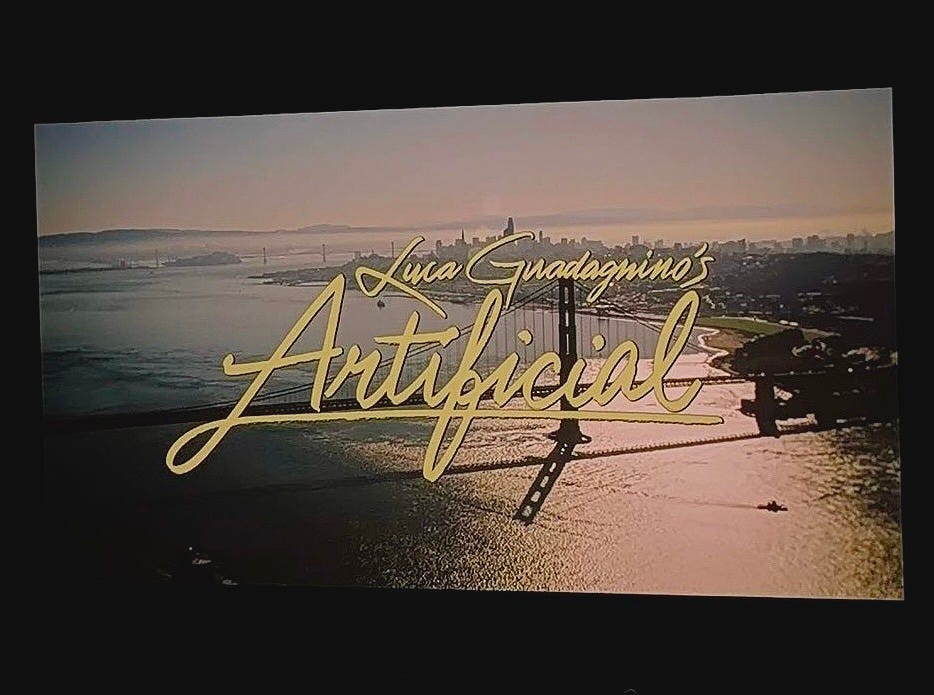
And the dichotomy is fascinating. Visually, Artificial is an objectively gorgeous film, steeped in Guadagnino’s signature sensibility, familiar from Call Me by Your Name, Challengers and Queer. There is an almost absurd beauty to the filmmaking, a deliberate elegance that makes the film a pleasure to look at. Even the title card leans more romantic than anything remotely techy. Yet its heart is heartbreaking. That, too, is a Guadagnino speciality, although here the visceral intimate pain of his previous work gives way to something more cosmic: the creeping dread of a future that might be bigger than any one person, something we’ve collectively invited into our lives without quite understanding what we’ve signed up for.
Ilya, Not Altman: The Real Protagonist
At the centre of this story is not Sam Altman, surprisingly, but Ilya Sutskever, played by Anora’s Yura Borisov. The OpenAI co-founder is the prodigal computer scientist whose work on artificial general intelligence helped propel the company towards its grand ambitions. In the film, Sutskever is the earnest believer, the scientist who wants to build something extraordinary but insists that it must be built safely. He is concerned with the technology’s potential and the responsibility that comes with it, even when others dismiss his vision.
Altman and his colleagues recognise the value of Sutskever’s mind. But it is their collaboration that accelerates the technology towards heights neither the science nor the safeguards can comfortably contain. As the triumphs snowball, the moral and ethical considerations begin to cascade downwards, and Sutskever appears increasingly unable to keep pace with the very thing he helped create.
It is a familiar tragedy of scientific hubris: the idealist who builds the machine, only to discover that the machine has acquired a life of its own. Except that, in this case, the machine is being built by a company, fuelled by capital, and marketed to the entire world.
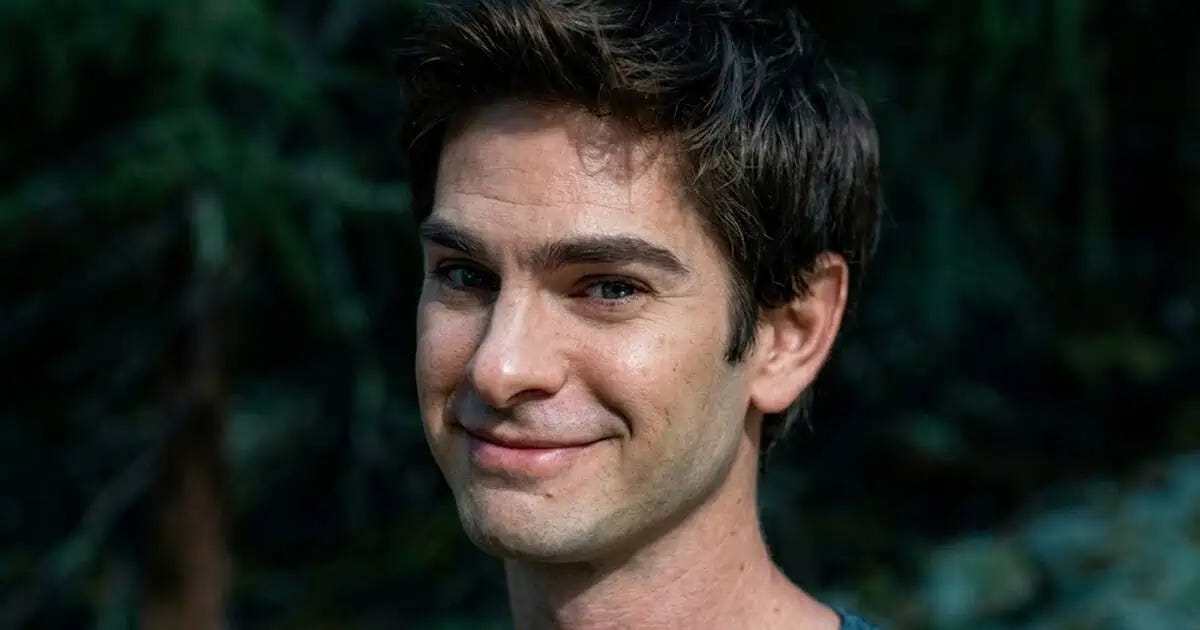
Andrew Garfield, meanwhile, plays Altman almost too well. Or, at least, the caricature of Altman as the film’s antagonist. He has the mannerisms down, delivering a slick, shifty, manipulative, narcissistic and evasively faux-naïf performance that makes you want to shake him by the shoulders. He is charming enough to get people onside, slippery enough to dodge accountability. Whether this is a fair portrait of the real Altman is a separate conversation; as a cinematic character, he is an effective herald of the bleak future the film imagines.
The supporting cast is equally delightful. Monica Barbaro and Cooper Hoffman are standouts, while the parade of familiar faces makes the film feel like a game of Where’s Waldo? for Hollywood’s supporting-actor pool. Billie Lourd, Zosia Mamet, Cooper Koch and Will Angus are among the recognisable faces popping up along the way. For anyone more fluent in the tech world than the acting world, there is an equally entertaining Silicon Valley edition, with Elon Musk, Dario Amodei and Satya Nadella impersonations.
Then there is the general portrayal of nerds, which deserves its own little round of applause. Guadagnino understands the particular brand of awkwardness, conviction and delusion that can coexist in a room full of exceptionally intelligent people. The film is at its funniest when it lets these personalities collide, puncturing the self-seriousness of technological revolution with the absurdity of the people driving it.
Superficial artificial
Still, Artificial is not without its shortcomings. For those already familiar with the industry, some of its nuances may feel lost. The film is more interested in retelling what happened than interrogating why people made the decisions they did. Altman’s hunger for power gets a brief airing, but it is quickly overtaken by the more immediate reality of his power: the sense that he is simply too influential to challenge. The film gestures towards the consequences of AI, including the risks to children and the environmental toll of data centres, but these remain fleeting possibilities rather than the centre of its inquiry. Given the relatively early period (which is also baffling given this “early period” is a mere 3 years in the past: 2023) in OpenAI’s story that the film covers, this is understandable, but it also leaves much unsaid.
There’s a growing consensus that perhaps this film has arrived too soon. That it’s too early in humanity’s AI storyline to be making a movie about the people shaping it, that we haven’t yet seen enough of the ending to begin telling the story. But I disagree. If anything, the film’s timing is part of its value. This is an informed take on a world whose most influential players remain largely anonymous to the general public. People rely on these tools every day without necessarily knowing who built them, who funds them or whose interests they ultimately serve. Hell, some people still think it’s called “ChatGBT”.
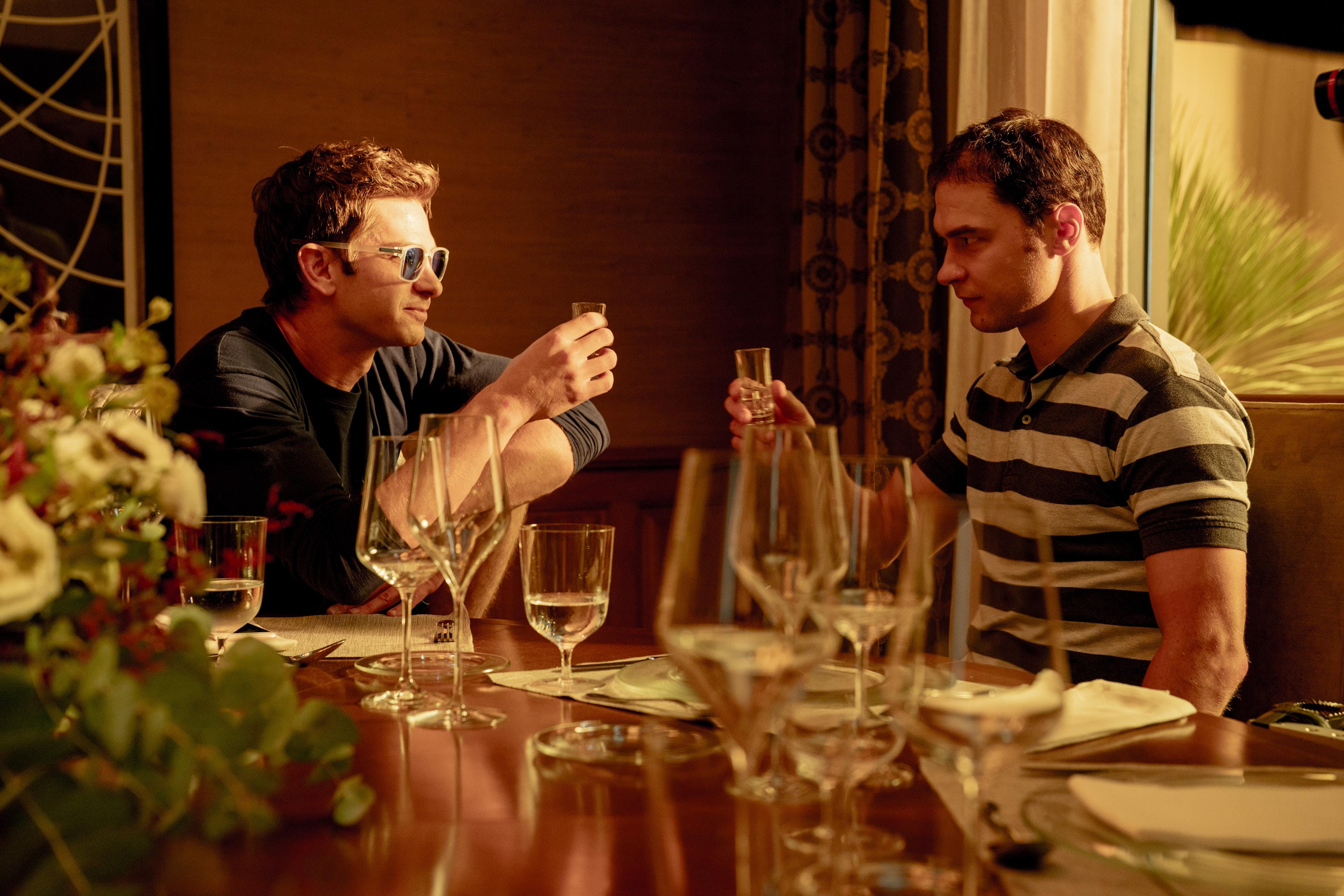
Of course, a film that delved deeper into data protection, hallucinations, labour displacement, energy consumption and the myriad other dangers of AI might be more immediately informative, perhaps even scarier. But is that really Guadagnino and his team’s responsibility? Artificial isn’t an investigative report or a comprehensive account of every harm these technologies might inflict. It’s a film about the people behind the curtain, the competing interests that drive them, and the moment idealism begins to buckle under the weight of aspiration.
Perhaps I would have felt differently had I watched this before Digger, which has evidently made me think a great deal about art and its purpose. But in a post-Digger world, I find myself more interested in what a film can reveal than in everything it can explain. And Artificial, for all its limitations, works as a revelation. It gives faces, personalities and motives (however selectively rendered) to the forces shaping a technology that can often feel abstract, inevitable and impossible to challenge.
The irony is that a film about the dangers of concentrated technological power has itself struggled to find a powerful distributor. Whether Amazon’s withdrawal was directly connected to its OpenAI deal remains unproven, and the other studios’ decisions may have their own explanations. But the optics are difficult to ignore. A film about the people who may be building our future has had to fight for the right to be seen in the present.
And that, perhaps, is the most unsettling thing about Artificial. We may still be too early in the story to know how it ends, but we’re already at the point where telling it can be a problem. If The Social Network chronicled the birth of a new digital world, Artificial suggests we may be watching the construction of something far more pervasive, with far less certainty about who, if anyone, is in control.
Maybe the film is right to sound the alarm before the disaster arrives and just give us a glimpse into the man/men behind the curtain.
My highlights of this film
Every single time Ike Barinholtz came on screen as Elon Musk. No notes.
Luca Guadagnino and Jonathan Anderson’s (Yes, the fashion designer, the film’s costume designer and Dior creative director himself) cameos as cameramen.
Monica Barbaro’s Mira Murati being asked during her Tesla interview whether she is used to toxic masculinity, given the companies she’s worked at, only to respond that she doesn’t particularly see them as masculine.
The “Feel the AGI” scenes.
The online meeting announcing Dario Amodei’s departure from OpenAI.
Andrew Garfield smashing a laptop. Yet again. Some things never change.
Some genuinely amazing dialogue, including but not limited to:
“Hey, Prometheus wasn’t afraid of, like, fire.” “Prometheus didn’t have to make a deal with Microsoft.”
“Visionaries lie to themselves, liars lie to everybody else.”
“Just ask ChatGPT.”